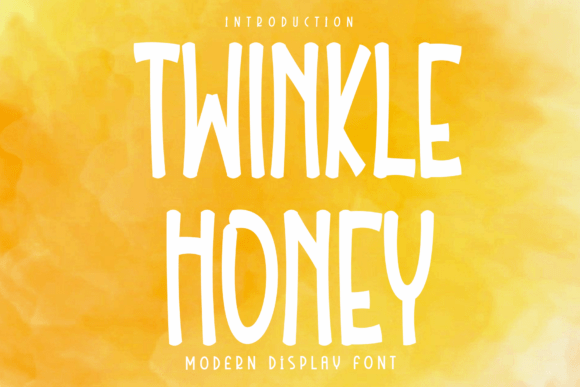
Twinkle Honey: The Elegant Handwritten Font That Feels Like a Signature
Imagine opening a wedding invitation and feeling an immediate sense of warmth, refinement, and intention—before reading a single word. Or scrolling through a photographer’s portfolio and pausing not just at the image, but at the subtle, flowing watermark that seems to float across it like ink drawn by hand. That quiet confidence? It often starts with Twinkle Honey.
More Than Just a Pretty Script
Twinkle Honey isn’t another decorative font chasing trends. It’s a thoughtfully crafted modern handwritten script—designed not for flash, but for presence. Its defining traits are organic, not engineered: smooth, generous curves; elongated, unhurried strokes; and a natural rhythm that mimics the lift and flow of real pen-on-paper movement. Unlike many script fonts that rely on tight loops or exaggerated flourishes, Twinkle Honey breathes. It balances elegance with approachability—luxurious without being stiff, personal without feeling casual.
This balance is intentional—and rare. Many handwritten fonts fall into one of two traps: either they’re overly formal (stiff, rigid, and hard to read at smaller sizes), or too playful (loose, inconsistent, and unsuited for professional contexts). Twinkle Honey avoids both. Its letterforms maintain strong internal spacing, clear contrast between thick and thin strokes, and reliable legibility—even in body text settings when used judiciously.
Who Finds Twinkle Honey Most Valuable?
The answer isn’t “designers only.” While graphic designers reach for Twinkle Honey instinctively, its real power lies in how widely it serves creators and business owners who value authenticity and emotional resonance:
- Photographers use it for watermarks that enhance—not distract—from their work. Because Twinkle Honey sits lightly on images, its graceful curves integrate naturally, preserving visual hierarchy.
- Wedding professionals (planners, stationers, calligraphers) rely on it for save-the-dates, menus, and signage. Its warmth supports storytelling—making couples feel seen, not styled.
- Personal branders (coaches, writers, wellness practitioners) choose Twinkle Honey for logos, social bios, and email headers. It signals care, individuality, and human-centered values—without needing explanation.
- Editorial designers apply it to pull quotes, chapter headings, or mastheads in magazines and digital publications where tone matters as much as content.
- Small business owners (especially in lifestyle, beauty, or artisanal niches) use it to reinforce brand voice—think boutique packaging, product labels, or Instagram story highlights.
Where Twinkle Honey Shines—and Where It Asks for Thoughtful Use
Like any expressive tool, Twinkle Honey thrives when matched to purpose—not just aesthetics. Here’s what works—and what to keep in mind:
✅ Strengths That Deliver Real Value
- Natural readability at medium-to-large sizes: Headlines, quotes, and short statements remain clear and inviting—even on mobile screens.
- Strong typographic personality: It communicates tone instantly. No need for extra adjectives in your copy to signal “elegant” or “thoughtful”—Twinkle Honey does that work visually.
- Seamless integration with minimalist layouts: Paired with clean sans-serifs (like Inter or Lora) or soft serif companions, it adds dimension without clutter.
- Web-friendly performance: Available in optimized WOFF2 formats, it loads quickly and renders crisply across devices—no fuzzy edges or rendering hiccups.
⚠️ Practical Considerations
None of this means Twinkle Honey is universally ideal for every use case. Awareness helps avoid missteps:
- Not built for long paragraphs: Its connected, flowing nature makes extended reading tiring. Reserve it for emphasis—not exposition.
- Limited language support: Currently designed for Latin-based languages (English, Spanish, French, German, etc.). If your audience includes diacritical-heavy or non-Latin scripts, pair it with a robust supporting typeface.
- Less effective at ultra-small sizes: Below ~14px, fine stroke details begin to soften. For tiny UI elements or footnotes, lean on a neutral companion font instead.
- Requires thoughtful pairing: Using Twinkle Honey alone—or stacked with other decorative fonts—can overwhelm. Its elegance is amplified when grounded by simplicity elsewhere.
Real-World Uses: Beyond the Obvious
It’s easy to default to “weddings and logos,” but Twinkle Honey reveals deeper utility when creators experiment intentionally:
- Podcast cover art: A host’s name in Twinkle Honey conveys intimacy and trust—key qualities in audio-first storytelling.
- Email subject lines: In inbox previews, its distinctive shape stands out among blocks of sans-serif text—boosting open rates through visual recognition.
- Printed recipe cards: Home cooks and food bloggers use it for titles and ingredient headers, adding handmade charm to culinary content.
- Custom Notion templates: Entrepreneurs insert Twinkle Honey-styled headers into dashboards to create calm, intentional workflows—turning productivity tools into personal spaces.
- Physical product stamps: Small-batch makers engrave Twinkle Honey onto rubber or metal stamps for packaging, giving mass-produced items a bespoke feel.
Evaluating Whether Twinkle Honey Fits Your Project
Ask yourself these three questions before committing:
- Does this project benefit from warmth and humanity? If your goal is clinical precision or bold authority (think tech dashboards or emergency signage), Twinkle Honey likely isn’t the best fit.
- Will the font be seen in context—or in isolation? It excels when paired meaningfully. Try sketching a quick mockup: does Twinkle Honey elevate the surrounding design, or compete with it?
- Is legibility a priority at the intended size and medium? Print invites? Yes. Mobile app buttons? Probably not. Honest assessment prevents last-minute swaps.
If you answered “yes” to the first two—and “yes, with intention” to the third—you’re likely holding the right tool. Twinkle Honey doesn’t shout. It leans in. It lingers. And in a world saturated with generic visuals, that kind of quiet distinction is increasingly rare—and deeply valuable.
A Final Note on Authenticity
Fonts carry weight—not just visual, but emotional. Twinkle Honey succeeds because it doesn’t try to imitate handwriting perfectly. Instead, it captures its spirit: the slight variation, the gentle pressure shifts, the confidence in each curve. That’s why it feels authentic—not like a filter, but like a choice.
Whether you’re launching a new brand, designing a keepsake, or simply refreshing your digital presence, choosing Twinkle Honey says something subtle but significant: You care how it feels—not just how it looks.