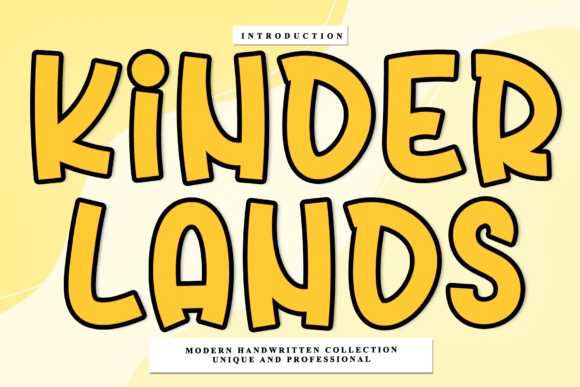
Kinder Lands: A Timeless Handwritten Font
If you’ve ever paused on a beautifully crafted Instagram quote, lingered over the warmth of a small-batch product label, or felt an instant connection with a boutique’s logo—chances are, a font like Kinder Lands was quietly doing the work. It’s not flashy or aggressive. It doesn’t shout. Instead, it leans in with quiet confidence, offering charm, clarity, and a hand-drawn sincerity that feels both personal and polished.
What Makes Kinder Lands Stand Out
Kinder Lands is a premium handwritten font—not a rushed brush script or an overly ornate calligraphy style, but something more grounded and intentional. Every lowercase ‘a’, ‘g’, and ‘y’ carries subtle variation in stroke weight and terminal shape. Uppercase letters have gentle flourishes that never overwhelm. The spacing is open and breathable; the rhythm feels natural, like handwriting from someone who writes thoughtfully—not hurriedly.
Its personality sits comfortably between friendly and refined: warm enough for a children’s book cover or a handmade soap label, yet confident enough for a wellness brand’s website hero text or a wedding invitation suite. It avoids the twee pitfalls of some script fonts because it prioritizes legibility without sacrificing character. That balance is rare—and valuable.
Where Kinder Lands Truly Shines
This isn’t a font you’d use for body copy in a 10-page report. Kinder Lands is a display font—designed for impact, not endurance. Think of it as your go-to for moments where tone and emotion matter as much as information.
- Logo design: Especially for service-based businesses (yoga studios, therapists, independent educators) or creative makers (pottery studios, letterpress printers, botanical illustrators), Kinder Lands adds approachability without diluting professionalism.
- Social media graphics: A single line of text set in Kinder Lands over a neutral background stops scrollers. Try it for quote cards, launch announcements, or seasonal offers—it pairs effortlessly with clean photography or soft textures.
- Packaging design: On jars, tags, or folded boxes, its human touch signals care and craft. Unlike rigid sans serifs, Kinder Lands tells customers, “This was made by someone who paid attention.”
- Editorial design: Use it sparingly—for pull quotes in a magazine spread, chapter headings in an illustrated memoir, or title pages in indie publishing projects. Its warmth invites readers before they even start the first sentence.
It also works surprisingly well in web design—but only where it’s meant to be seen. As a headline font on a homepage banner? Excellent. As navigation text or paragraph copy? Not ideal. Its strength lies in contrast: pairing it with a neutral sans serif (like Inter, Lato, or even a light-weight Helvetica Neue) creates visual hierarchy that guides the eye naturally.
How It Shapes Perception—Without Saying a Word
Typeface choice is one of the most underestimated tools in brand identity. Kinder Lands doesn’t just look nice—it communicates intention. When used consistently across touchpoints (website, email signature, business card), it reinforces trust through familiarity. Customers begin to associate that gentle curve, that slight tilt in the ‘e’, with your voice and values.
That consistency matters more than many realize. A café using Kinder Lands on its chalkboard menu, tote bags, and Instagram Stories builds cohesion no filter or color palette alone can replicate. And because it’s inherently legible at larger sizes, it supports recognition—even when scaled down on a mobile screen or printed small on a sticker.
Importantly, it avoids looking dated. Unlike trend-driven fonts that feel “of 2021” or “very 2018,” Kinder Lands leans into timelessness. Its strokes aren’t overly digitized, nor do they mimic vintage ink blots. It feels current because it feels human—and humanity doesn’t go out of style.
Practical Tips Before You Use It
Before dropping Kinder Lands into your next project, ask yourself three things:
- Is this a moment where personality matters more than utility? If you need fast scanning (like instructions or legal disclaimers), reach for a highly legible sans serif instead.
- Does the font come with enough styles? Check whether the package includes at least regular and bold weights—and ideally, alternate characters or ligatures. Kinder Lands often includes stylistic sets that let you swap in a more playful ‘&’ or a slightly different ‘s’. These small details add polish.
- Is your license commercial-ready? Most reputable vendors offer clear licensing terms. If you’re using it for client work, merchandise, or digital products, confirm the license permits redistribution or embedded use. Never assume “personal use only” covers your newsletter or Shopify store banners.
Test it early. Type out your actual headline—not placeholder text. Try it at three sizes: large (48px+), medium (28–36px), and small (18–24px). See where readability holds up and where it starts to blur. Then test pairings: try it above a clean, low-contrast sans serif paragraph. Does the contrast feel intentional—or jarring? Adjust letter-spacing slightly if needed; a little extra tracking often helps script fonts breathe on screen.
A Font That Grows With Your Work
Designers sometimes overlook how a font can evolve alongside a brand. Kinder Lands scales gracefully—from a solo creator’s Canva template to a full brand system with custom illustrations and motion graphics. Because it’s not tied to a single aesthetic (minimalist, rustic, modern, boho), it adapts. A stationery designer might use it for monogrammed notecards, then shift to a tighter tracking and bolder weight for a limited-edition poster series.
For bloggers and content creators, it’s a smart investment—not just for visuals, but for voice. Using Kinder Lands in recurring elements (like your “subscribe” CTA or featured quote section) makes your content feel curated, not automated. And for small business owners launching their first website or packaging line, it’s one decision that quietly elevates perception—without requiring a full rebrand.
In short: Kinder Lands isn’t about chasing trends. It’s about choosing a tool that reflects care—in how it’s drawn, how it’s used, and how it makes people feel when they see it. That kind of intention shows up—not in metrics, but in the way someone pauses, smiles, and remembers your name.