Familytime: The Handwritten Font That Elevates Authentic Connection
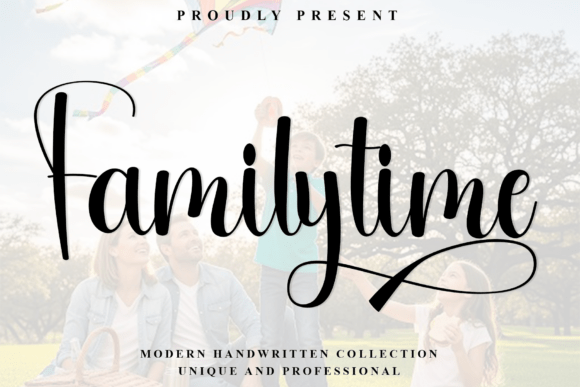
When a brand, invitation, or personal project calls for warmth, sincerity, and unmistakable elegance—Familytime doesn’t just fit the brief. It redefines it. This isn’t another decorative script that sacrifices legibility for flair. Familytime is a modern handwritten script font designed with intention: generous curves, elongated strokes, and a natural rhythm that mimics the confidence of a practiced signature.
A Typeface Built for Emotional Resonance
Typography is rarely neutral. Especially in emotionally charged contexts—weddings, family portraits, milestone announcements—the right font silently communicates tone before a single word is read. Familytime excels here because it feels human. Its smooth transitions between thick and thin strokes echo the subtle pressure shifts of real pen-on-paper writing. There’s no mechanical repetition—each character flows into the next with organic variation, lending authenticity without sacrificing polish.
This isn’t accidental. The designers behind Familytime studied calligraphic tradition but filtered it through contemporary design sensibilities. The result? A typeface that balances luxury with approachability—refined enough for high-end editorial layouts, yet warm enough to feel like a note from someone you deeply trust.
Where Familytime Fits Naturally—and Why It Stands Out
You’ll find Familytime thriving where personality matters most:
- Wedding stationery: From save-the-dates to monogrammed napkins, Familytime adds timeless grace. Its elongated ascenders and descenders create visual breathing room on invitations—making names and dates feel celebrated, not crowded.
- Photography watermarks: Unlike blocky or overly stylized fonts, Familytime sits lightly over images without competing. Its delicate contrast and open spacing ensure visibility—even at small sizes—without distracting from the subject.
- Personal branding: Coaches, creatives, and wellness professionals use Familytime to signal empathy and individuality. When your logo or social bio features this font, it quietly says, “I lead with care—not just competence.”
- Editorial design: Magazines, boutique newsletters, and literary journals apply Familytime for pull quotes, chapter headings, or mastheads. Its elegance lifts written content without overwhelming it—especially when paired with clean, minimalist sans-serif body text.
What separates Familytime from similar scripts? Control. Many elegant fonts sacrifice readability at smaller sizes or struggle with kerning across letter combinations. Familytime includes carefully tuned OpenType features—including contextual alternates and ligatures—that adjust automatically based on surrounding characters. So “Th” or “ff” flows seamlessly, not awkwardly. You get sophistication out of the box—not after hours of manual tweaking.
Practical Integration Into Real-World Workflows
Adopting a new font shouldn’t mean reinventing your design process. Familytime works natively in Adobe Creative Cloud (Photoshop, Illustrator, InDesign), Figma, and Affinity apps. It supports full Latin character sets—including accented letters used across European languages—so it scales gracefully for global or bilingual projects.
For photographers building Lightroom presets or watermark templates: install Familytime, set your opacity and placement, and reuse across hundreds of exports. For stationers designing Canva templates: upload the font once, then deploy it across dozens of customizable wedding suites. No workarounds. No compromises.
And if you’re working with clients? Familytime simplifies feedback loops. Because its tone is so clearly defined—luxurious, personal, unhurried—clients rarely ask, “Can we make it *more* elegant?” or “Does this feel too formal?” Instead, conversations shift toward meaningful details: color palette, paper stock, layout rhythm. That’s the power of intentional typography.
Choosing Familytime Over Alternatives: What Designers Actually Consider
Before selecting any script font, professionals weigh several quiet but critical factors:
- Legibility at scale: Will it hold up as a tiny Instagram bio handle? As a large-scale wall mural? Familytime’s balanced x-height and generous counters keep letters distinct—even in low-resolution or fast-glance scenarios.
- Pairing versatility: Does it clash or complement common body fonts? Yes—it harmonizes beautifully with both geometric sans-serifs (like Montserrat or Inter) and classic serifs (such as Merriweather or Playfair Display). Its warmth softens sharp edges; its structure grounds softer companions.
- Licensing clarity: Is usage permitted for client work, digital products, or merchandise? Familytime offers straightforward licensing tiers—including extended options for app integration or SaaS platforms—so there’s no last-minute legal hesitation.
- Emotional alignment: Does it reflect the values behind the project? A tech startup pitching AI ethics might choose Familytime to soften messaging and emphasize human-centered intent. A luxury skincare line might use it to evoke artisanal care—not clinical precision.
It’s also worth noting what Familytime isn’t designed to do—and why that’s a strength. It’s not meant for data tables, code documentation, or long-form paragraph text. That limitation is intentional. By staying focused on expressive, short-form applications, Familytime delivers unmatched impact where it counts most.
Small Details That Make a Lasting Impression
Look closely at how Familytime handles punctuation. The ampersand (&) isn’t generic—it’s a custom-drawn flourish, echoing the same curve logic as the lowercase “a” or “g.” Quotation marks tilt subtly, matching the font’s natural slant. Even the period carries gentle weight, landing with quiet confidence rather than a flat dot.
These micro-decisions matter. They’re what turn a competent design into one that feels *considered*. When someone receives a Familytime-set wedding invitation, they don’t analyze kerning—but they *feel* the care embedded in every curve. When a photographer signs their portfolio site with Familytime, viewers subconsciously register sincerity before reading a single caption.
That emotional resonance extends to accessibility. While script fonts inherently pose challenges for screen readers (best reserved for headings and logos, not body copy), Familytime’s clear letterforms reduce visual ambiguity for users with dyslexia or low vision—especially when used at appropriate sizes and with sufficient contrast.
Getting Started With Intention—Not Just Aesthetic
If you're evaluating Familytime for an upcoming project, begin with restraint. Try it in one high-impact place first: the headline of a blog post, the name on a business card, the monogram on a linen tote. See how it changes the energy of the piece—not just how it looks, but how it *lands*.
Then test context. Place it beside your current brand fonts. Does it elevate—or compete? Print a sample at actual size. View it on mobile. Ask a colleague who isn’t a designer: “What does this make you feel?” Their unfiltered reaction often reveals more than technical analysis ever could.
Because ultimately, Familytime isn’t about ornamentation. It’s about signaling value—of relationships, moments, craftsmanship, and presence. In a world saturated with speed and automation, choosing Familytime is a quiet act of prioritizing meaning over momentum. And that, more than any stylistic detail, is why it endures.