Harvey Madison: Where Handwritten Warmth Meets Design Precision
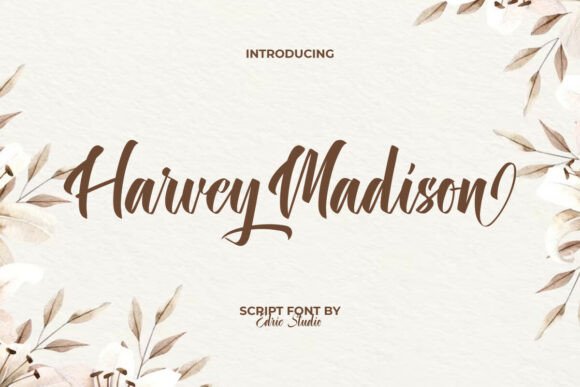
Typography is rarely just about letters—it’s about tone, trust, and texture. In a digital landscape saturated with geometric sans-serifs and ultra-polished display fonts, the Harvey Madison font stands apart not by shouting, but by leaning in with quiet confidence. It doesn’t simulate handwriting; it *embodies* it—fluid, unhurried, and unmistakably human. Designed with intention rather than algorithmic mimicry, Harvey Madison bridges the gap between authenticity and usability, offering designers, small business owners, educators, and content creators a rare combination: expressive character without sacrificing clarity.
A Script Font That Breathes Naturally
What sets Harvey Madison apart from many script typefaces is its commitment to organic rhythm. Unlike fonts that rely on rigid symmetry or exaggerated flourishes to signal “handwritten,” Harvey Madison flows with subtle variation in stroke weight, gentle entry and exit strokes, and thoughtfully calibrated connections between letters. Its baseline isn’t perfectly horizontal—it sways slightly, like ink settling on paper, reinforcing the impression of real-world writing rather than digital replication.
This naturalism isn’t accidental. Each glyph was crafted to reflect how people actually write when relaxed and intentional: a slight lift before the next word, a soft taper at the end of an ‘s’, a rounded ‘o’ that invites the eye to linger. The result is a typeface that feels familiar—not because you’ve seen it before, but because it echoes the warmth of a handwritten note passed between friends, a signature on a wedding invitation, or a label on a locally sourced honey jar.
Readability Without Compromise
One common trade-off with script fonts is legibility—especially at smaller sizes or in longer passages. Harvey Madison defies that expectation. Its open counters (the enclosed spaces in letters like ‘a’, ‘e’, and ‘o’) remain generous. Letterforms maintain clear distinction even in lowercase runs, and spacing has been fine-tuned to prevent visual crowding. This means it works effectively beyond decorative accents: as body text in boutique product descriptions, short captions beneath artisan photography, or even modest paragraphs in editorial layouts for lifestyle blogs or sustainable fashion newsletters.
Designers working across platforms will appreciate how well Harvey Madison scales. At 24pt, it commands attention in a social media carousel headline. At 14pt, it remains comfortably readable in a printed thank-you card or email newsletter footer. That versatility stems from deliberate design decisions—not just aesthetic choices, but functional ones grounded in typographic best practices.
Real-World Applications Across Industries
The strength of Harvey Madison lies in its contextual adaptability. Its earthy, romantic presentation makes it especially resonant in sectors where emotional resonance matters as much as information delivery.
- Wedding & Event Design: From save-the-dates to menu cards and vow books, Harvey Madison conveys intimacy without formality. Unlike overly ornate scripts that feel distant or dated, it suggests sincerity—ideal for couples prioritizing authenticity over tradition.
- Natural & Wellness Brands: Skincare labels, herbal tea packaging, and farm-to-table restaurant menus benefit from Harvey Madison’s grounded elegance. Its soft edges echo organic textures—linen, clay, watercolor—while its clarity ensures ingredient lists or sourcing statements remain accessible.
- Fashion & Lifestyle Content: Instagram quote graphics, lookbook typography, and seasonal campaign headers gain personality without clutter. When paired with a clean sans-serif for supporting text, Harvey Madison becomes the voice—not just the decoration—in visual storytelling.
- Educational & Community Initiatives: Teachers crafting classroom posters, nonprofit organizers designing community garden signage, or librarians designing reading challenge materials find Harvey Madison approachable and inclusive. Its friendly demeanor lowers barriers to engagement, especially among younger audiences or multilingual communities where visual warmth supports comprehension.
Technical Strengths You Can Rely On
Beyond aesthetics, Harvey Madison delivers practical utility. Its PUA (Private Use Area) encoding is a significant advantage for users who need consistent access to stylistic alternatives without complex OpenType setup. Every swash, ligature, and alternate character—including contextual variants for ‘f’, ‘t’, and ‘y’—is mapped to intuitive keystrokes. No special software required. Whether you’re using Adobe Creative Cloud, Affinity apps, or even web-based tools like Canva (with uploaded font support), accessing these features remains straightforward.
This encoding also future-proofs usage. As more platforms adopt variable font capabilities or expand web font support, Harvey Madison’s structured glyph set ensures compatibility and predictability. For developers embedding the font into custom websites or CMS templates, the consistent naming and organization simplify CSS implementation and reduce cross-browser rendering surprises.
Who Benefits Most—and How
While anyone can use Harvey Madison, certain users derive exceptional value from its specific attributes:
- Small Business Owners: Especially those selling handmade goods, wellness services, or curated experiences. Harvey Madison helps communicate care and craftsmanship—qualities customers increasingly seek. A soap maker using it on product tags signals attention to detail; a yoga studio applying it to workshop flyers evokes calm intentionality.
- Content Creators & Social Media Managers: Standing out in crowded feeds requires both visual distinctiveness and instant readability. Harvey Madison provides both—its rhythm draws the eye, while its structure retains meaning even in fast-scrolling environments.
- Educators & Nonprofit Communicators: When building trust around sensitive topics—mental health, environmental stewardship, literacy programs—a typeface that feels personal and non-institutional fosters connection. Harvey Madison avoids the coldness of corporate fonts while maintaining professionalism.
- Print Designers & Stationers: Its performance across paper stocks—from textured cotton rag to matte recycled finishes—is consistently strong. Ink spread is minimized thanks to balanced stroke contrast, preserving delicate details in letter connections and swashes.
Thoughtful Pairings and Practical Considerations
No font exists in isolation. Harvey Madison shines brightest when paired intentionally. Its warmth pairs beautifully with neutral, structurally sound companions: a warm gray sans-serif like Inter or Manrope for body text, or a low-contrast serif like EB Garamond for editorial balance. Avoid clashing high-contrast or tightly spaced fonts—they compete for attention rather than complementing Harvey Madison’s relaxed cadence.
Also consider context carefully. While highly versatile, Harvey Madison isn’t ideal for dense legal disclaimers, technical documentation, or interfaces requiring rapid scanning (like airport signage or app navigation). Its strength lies in moments of pause, reflection, or emotional emphasis—where slowing down is part of the message.
Color use matters too. Its earthy sensibility harmonizes with muted palettes—terracotta, sage, oat, charcoal—but also holds up against crisp white or deep navy backdrops. Avoid overly saturated neon backgrounds; they visually overwhelm its subtlety. Test contrast ratios, especially for accessibility compliance—Harvey Madison performs well at standard text sizes when used with sufficient luminance difference.
Why Designers Return to Harvey Madison Again and Again
In practice, Harvey Madison earns repeat use not because it solves every problem, but because it solves specific ones exceptionally well: conveying warmth without cliché, elegance without pretense, and personality without noise. It’s the kind of typeface that disappears into the experience—until someone pauses, looks closer, and feels something: recognition, comfort, or curiosity.
That emotional resonance translates directly into engagement metrics—longer dwell times on landing pages, higher click-through on quote graphics, stronger brand recall among local customers. These aren’t speculative benefits. They emerge from decades of typographic research confirming what users intuitively know: we respond to human cues in design, and handwriting—when executed with skill and restraint—is one of the most powerful.
Harvey Madison doesn’t ask designers to choose between beauty and function. Instead, it invites them to prioritize both—gently, gracefully, and with unmistakable presence.