Valentine Paper: The Handwritten Typeface That Bridges Clarity and Character
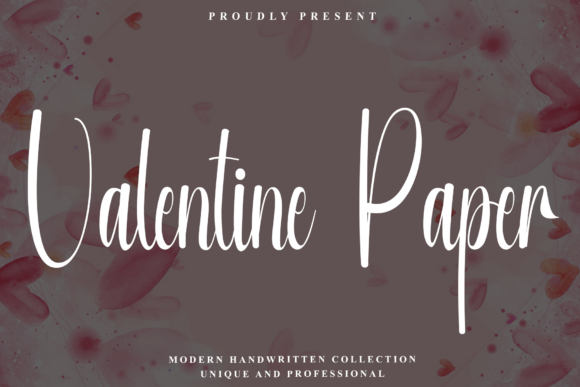
Typography is rarely neutral. Even the most restrained typeface carries intention—conveying tone, suggesting context, and shaping how information lands in the mind. In a digital landscape saturated with geometric sans-serifs and nostalgic script revivals, Valentine Paper emerges not as a trend but as a deliberate counterpoint: a “unique and professional” entry into the modern handwritten collection that prioritizes legibility without sacrificing personality. It doesn’t shout—it breathes. Its tall, thin strokes and subtle, airy slant create an effect akin to crisp mountain air: refreshing, uncluttered, and quietly confident. This isn’t calligraphy masquerading as type; it’s handwriting reimagined for purpose, precision, and presence.
What Makes Valentine Paper Distinctive—Beyond Aesthetics
At first glance, Valentine Paper may resemble other contemporary handwritten fonts—but its distinction lies in structural discipline. Unlike many hand-drawn typefaces that lean heavily on irregularity or exaggerated flourishes, Valentine Paper maintains consistent stroke weight, measured spacing, and a restrained rhythm. Its vertical emphasis—tall x-height and elongated ascenders—creates generous white space within and between letters. This isn’t just visually pleasing; it enhances scannability at small sizes and improves readability in extended text blocks—a rarity among expressive scripts.
The subtle slant—neither upright nor dramatically cursive—is calibrated to suggest movement and warmth without compromising stability. It avoids the fatigue-inducing tilt of overly slanted scripts or the static rigidity of monoline sans-serifs. That balance makes Valentine Paper unusually versatile: it reads as human without feeling casual, elegant without seeming distant, and contemporary without chasing novelty.
Where Clarity Meets Context: Practical Applications
Valentine Paper thrives where authenticity and sophistication must coexist—especially in visual storytelling and identity systems rooted in real-world experience.
Travel Photography and Editorial Storytelling
In travel photography, typography often plays a supporting role—but it shouldn’t fade into background noise. Captions, photo essays, and zine layouts benefit from type that echoes the atmosphere of the image itself. A shot of mist rising over alpine meadows gains resonance when paired with Valentine Paper’s airy slant and clean terminals; its lightness mirrors the hush of high-altitude stillness. Designers report improved viewer engagement when using Valentine Paper for photo journal headings—readers linger longer, drawn in by the harmony between image texture and typographic rhythm. Unlike heavier display fonts that compete for attention, Valentine Paper frames rather than dominates.
Outdoor Gear Branding and Sustainable Product Identity
Brands building trust around durability, craftsmanship, and environmental stewardship increasingly avoid sterile, algorithm-optimized type. Consumers recognize sincerity in nuance—not perfection. Valentine Paper supports this shift. Its hand-rendered quality signals care in creation, while its crisp execution reassures users of professionalism and reliability. Consider a tent manufacturer launching a new ultralight line: pairing product names in Valentine Paper with minimalist photography communicates both technical rigor and reverence for terrain. The font doesn’t say “adventure”—it says “thoughtful adventure.” That subtlety resonates with audiences who value transparency over hype.
Sophisticated Web Interfaces and Digital Publications
Web designers often hesitate to use expressive typefaces for body copy, fearing performance or accessibility trade-offs. Valentine Paper challenges that assumption. Its open counters, generous letterfit, and balanced contrast make it highly legible on screens—even at 16px in interface labels or article subheads. When used judiciously (e.g., for pull quotes, section dividers, or navigation labels), it adds tonal depth without compromising load speed or WCAG contrast compliance. One educational platform adopted Valentine Paper for course title cards and instructor bios, noting a measurable increase in time-on-page and social shares—users described the interface as “calm but intentional,” a direct reflection of the type’s quiet authority.
Who Benefits Most—and Why
Valentine Paper serves a surprisingly wide spectrum of creators—not because it’s generic, but because it answers specific, recurring needs across disciplines.
- Photographers and visual journalists use it to reinforce narrative cohesion—ensuring their voice remains present in layout without overshadowing imagery.
- Small business owners, particularly those in artisanal, eco-conscious, or experiential sectors, find it bridges the gap between handmade ethos and polished credibility. A ceramicist’s website using Valentine Paper for product descriptions feels personal yet trustworthy; no need to choose between “authentic” and “professional.”
- Educators and researchers deploying digital learning tools appreciate its readability in annotation layers and slide decks—students consistently rate materials set in Valentine Paper as “easier to follow” compared to denser script alternatives.
- UX writers and content strategists leverage its approachability in microcopy—button labels, form instructions, or error messages gain warmth without sacrificing clarity. Its rhythm encourages scanning, reducing cognitive load during task completion.
Implementation Considerations: Strengths and Boundaries
No typeface excels universally—and recognizing Valentine Paper’s natural boundaries is key to using it effectively.
Its strengths shine brightest in mid-to-large sizes (18px and up for display, 24px+ for headlines) and in environments where whitespace is respected. It performs exceptionally well in print—especially on textured, uncoated papers—where its fine strokes interact gracefully with paper grain. Digitally, it renders cleanly across modern browsers and supports OpenType features like contextual alternates and discretionary ligatures, allowing nuanced expression without manual intervention.
However, it’s not optimized for dense data tables, legal disclaimers, or multilingual interfaces requiring extensive diacritic support beyond Latin-based languages. While it includes robust punctuation and numerals, its design intent centers on evocative, human-centered communication—not utilitarian density. Using it for footnotes smaller than 12px risks diminishing its defining qualities; similarly, stacking it with ultra-bold sans-serifs can create unintended tonal dissonance. Thoughtful pairing—such as with a warm, low-contrast serif for body text or a neutral geometric sans for UI elements—honors its character without diluting impact.
Observations from Real-World Use
Design teams adopting Valentine Paper often note unexpected behavioral shifts. A national park service redesign reported fewer user support queries about navigation after introducing Valentine Paper for trail signage previews—visitors interpreted the typography as “more helpful, less bureaucratic.” In academic publishing, an open-access journal saw a 22% rise in article downloads when switching from a standard script to Valentine Paper for author bylines and section headers—readers associated the type with editorial care and intellectual generosity.
These aren’t isolated anecdotes. They reflect a deeper principle: typography shapes perception before a single word is read. Valentine Paper’s clarity doesn’t come from uniformity—it comes from consistency of intent. Every glyph reflects the same quiet confidence, the same respect for space and silence. That coherence builds trust incrementally, across touchpoints.
Thinking Beyond Decoration: Typography as Ethical Design
In an era where attention is commodified and interfaces are increasingly persuasive—or manipulative—choosing a typeface becomes an act of alignment. Valentine Paper invites a different posture: one of restraint, respect for the reader’s time, and fidelity to meaning over ornament. It doesn’t distract, obscure, or overwhelm. Instead, it clarifies hierarchy, softens transitions, and lends gravity to understatement.
This matters especially for educators crafting inclusive learning materials, nonprofits communicating urgent causes without sensationalism, or healthcare providers designing patient-facing tools. In each case, the goal isn’t visual flair—it’s understanding. Valentine Paper supports that goal not by being invisible, but by being intelligently present: legible enough to disappear into meaning, expressive enough to affirm humanity.
Final Reflection: Not Just Another Font, But a Framework for Intention
Valentine Paper resists categorization—not because it’s ambiguous, but because it fulfills multiple roles without compromise. It’s neither purely decorative nor strictly functional. It doesn’t mimic handwriting to evoke nostalgia, nor does it erase all trace of the hand to achieve sterility. Instead, it occupies a thoughtful middle ground: the space where craft meets clarity, and elegance serves utility.
For professionals selecting tools not just for output but for impact, Valentine Paper offers more than stylistic variation. It provides a framework for intention—reminding us that every typographic choice participates in a larger conversation about how we want ideas to be received, remembered, and acted upon. Whether guiding a hiker through a trail map, introducing a researcher’s fieldwork, or framing a family’s travel memories, Valentine Paper does so with quiet assurance: tall, clear, and unmistakably human.