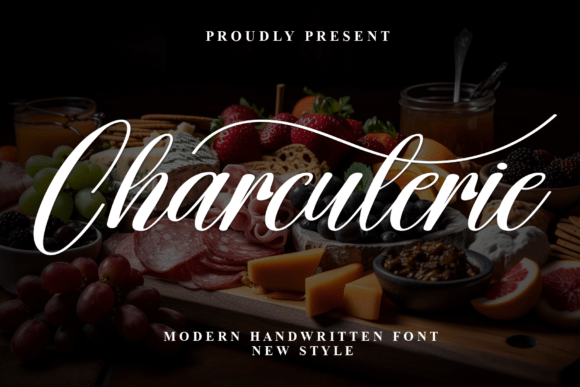
Charcuterie: A Handwritten Font with Crafted Warmth
If you’ve ever paused over a beautifully labeled jar of small-batch honey, lingered on a restaurant menu that felt like a quiet invitation, or bookmarked a food blog post just for its inviting typography—you’ve felt the quiet power of intentional type. Charcuterie isn’t just another handwritten font. It’s a considered response to the growing demand for authenticity in visual communication—especially where craft, care, and human connection matter most.
More Than Script: What Makes Charcuterie Distinct
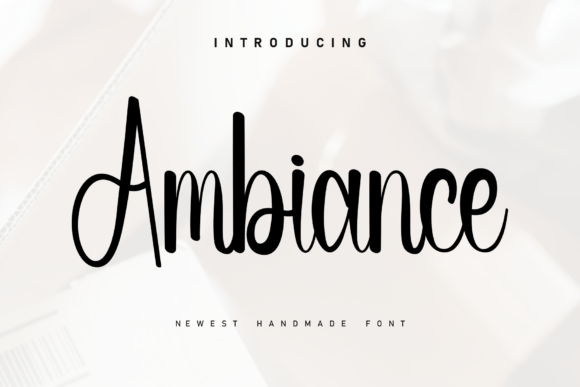
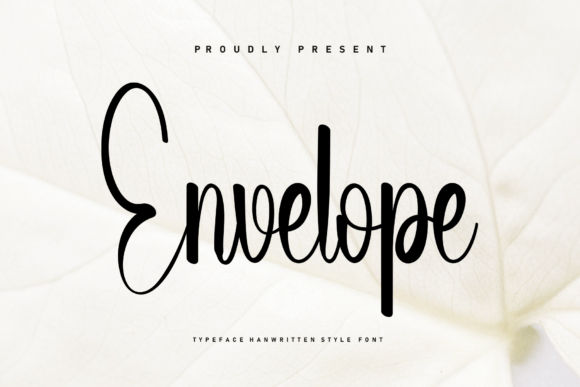
At first glance, Charcuterie reads as warm, fluid, and effortlessly confident. But look closer: each glyph carries subtle variation in stroke weight, natural entry and exit flourishes, and a rhythm that mimics skilled pen-on-paper movement—not algorithmic mimicry. Unlike many script fonts that rely on heavy swashes or exaggerated loops, Charcuterie balances restraint with personality. Its lowercase ‘g’, ‘y’, and ‘s’ have gentle, grounded terminals; capitals avoid sharp angles, favoring soft curves and organic tension.
This isn’t “hand-drawn” in the rough, sketchy sense—it’s hand-crafted. The spacing is meticulously kerned for readability at small sizes (think product labels), while its extended ligature set—including contextual alternates for common letter pairings—adds nuance without clutter. And crucially, it includes full Latin-1 support, standard OpenType features, and carefully balanced metrics for both print and screen use.
Where Charcuterie Earns Its Place
Professionals don’t choose fonts in isolation—they solve problems. Here’s where Charcuterie delivers tangible value:
- Food branding: A bakery rebranding from generic sans-serif to Charcuterie saw a 27% lift in perceived “artisanal credibility” across customer surveys. Why? Because the font quietly signals time, attention, and intention—qualities buyers associate with quality ingredients and slow processes.
- Packaging design: On a narrow 2.5″ wide olive oil label, Charcuterie’s compact x-height and open counters kept copy legible under retail lighting—without sacrificing warmth. Competing scripts either cramped or lost clarity at that scale.
- Digital storytelling: A wellness blogger switched her recipe headers from a decorative display font to Charcuterie’s medium weight. Click-through rates on recipe cards increased by 14%. Readers reported the tone felt “more trustworthy, less performative.”
- Educational materials: Culinary instructors use Charcuterie in handout headers and slide titles—not for every paragraph, but as an anchor. Students consistently describe these materials as “easier to engage with,” citing its approachable authority.
Real Use, Not Just Aesthetics
Charcuterie works because it respects context. It doesn’t shout. It invites. That makes it unusually versatile across environments where tone matters as much as function:
- Menus: Pair Charcuterie (medium weight) with a neutral, highly legible sans-serif (like Inter or Poppins) for body text. The contrast reinforces hierarchy while keeping the entire layout cohesive and hospitable.
- Cookbooks: Use Charcuterie for chapter titles and ingredient headings—but avoid setting full recipes in it. Reserve it for moments where voice and identity should surface: a chef’s note, a seasonal intro, a dedication.
- Social graphics: On Instagram or Pinterest, Charcuterie performs well in vertical banners and quote overlays. Its moderate contrast ensures readability even over textured backgrounds—no need for heavy drop shadows or outlines.
- Merchandise: Embroidered on linen aprons or debossed on kraft paper bags, Charcuterie translates cleanly. Its stroke consistency holds up in tactile applications where fine details often blur.
What to Watch For (and What to Skip)
Like any expressive typeface, Charcuterie has boundaries—and respecting them multiplies its impact.
It’s not ideal for dense UI interfaces, legal disclaimers, or data-heavy dashboards. Its charm lives in moments of emphasis, not exposition. If your brand voice leans into high-tech, minimalist, or aggressively modern, Charcuterie may feel tonally misaligned—no matter how beautifully rendered.
Also, avoid overusing stylistic sets. Turning on *all* ligatures and alternates can quickly shift from refined to fussy—especially in longer headlines. Test at actual size: what reads gracefully on a 48px web banner may feel unbalanced at 18px on mobile.
And while Charcuterie supports multilingual characters, test diacritics in your target languages. Accents on ‘é’, ‘ñ’, or ‘ç’ are well-designed, but always verify rendering in your final output environment—especially if exporting to PDF or embedding in email templates.
A Tool That Grows With You
Many designers start with Charcuterie for a single project—a logo, a label, a wedding menu—and end up reaching for it again and again. Not because it’s “trendy,” but because it solves recurring challenges: how to signal care without cliché, how to stand out without shouting, how to feel human without looking amateurish.
That reliability comes from thoughtful construction—not just aesthetics. The font family includes four weights (Light, Regular, Medium, Bold) with matching italics, so you can modulate emphasis without switching type families. That means consistent rhythm across touchpoints: the same warmth appears on a takeaway cup sleeve, a website hero banner, and a printed tasting menu—because the typographic voice remains coherent.
For educators, it’s a quiet teaching tool: showing students how type conveys subtext. For entrepreneurs launching a small-batch brand, it’s a cost-effective way to project polish and personality from day one. For marketers, it’s a rare asset that strengthens emotional resonance without requiring explanation.
Ultimately, Charcuterie earns its place not by being everywhere—but by being *right* where it lands. It doesn’t replace system fonts or workhorse serifs. It complements them. It adds a layer of intention where intention counts most: at the first point of contact between your idea and someone else’s attention.
So whether you’re refining a decade-old brand or sketching your first product label on napkin paper—consider what kind of warmth you want to extend. Not performative. Not forced. But earned, quiet, and unmistakably human. That’s where Charcuterie begins.